
IEEE Rolling Sphere Evaluation
Apply rolling sphere review aligned with established engineering practice to evaluate whether site elements are protected by the modeled shielding system.

Rolling Sphere Engine is a geometry-driven analysis tool built for real engineering workflows. It combines IEEE-based rolling sphere evaluation with interactive 3D review so engineers can identify exposure, validate coverage, and make defensible design decisions with less manual effort.
Supports rolling sphere-based evaluation methods referenced in standards such as IEEE 998, NFPA 780, and IEC 62305, enabling engineers to assess lightning protection coverage as part of their design evaluation.
The product evaluates shielding conditions directly against imported site geometry rather than treating the problem as a simplified calculator exercise. This approach supports the detailed review expected on substation and infrastructure projects where shielding layouts interact with real equipment geometry.
Rolling Sphere Engine is designed to fit into engineering workflows through CAD-independent OBJ import, practical design iteration, and high-performance analysis on large site models.
The analysis workflow covers the core modeling and review needs required for substation lightning protection design and similar infrastructure applications.
Apply rolling sphere review aligned with established engineering practice to evaluate whether site elements are protected by the modeled shielding system.
Import site geometry from OBJ files, allowing teams to work from CAD-derived models without requiring a specific design platform.
Model shield wires, wire sag behavior, and mast arrangements to reflect realistic protection schemes across complex layouts.
Inspect tents, sphere contact behavior, and protected regions visually to confirm where shielding is effective and where revisions are needed.
Use built-in measurement tools to review distances and clearances while comparing shielding concepts or refining structure placement.
Process large sites efficiently so engineers can re-run scenarios quickly and compare design alternatives without extended delays.
Representative application views from the current interface and review workflow.
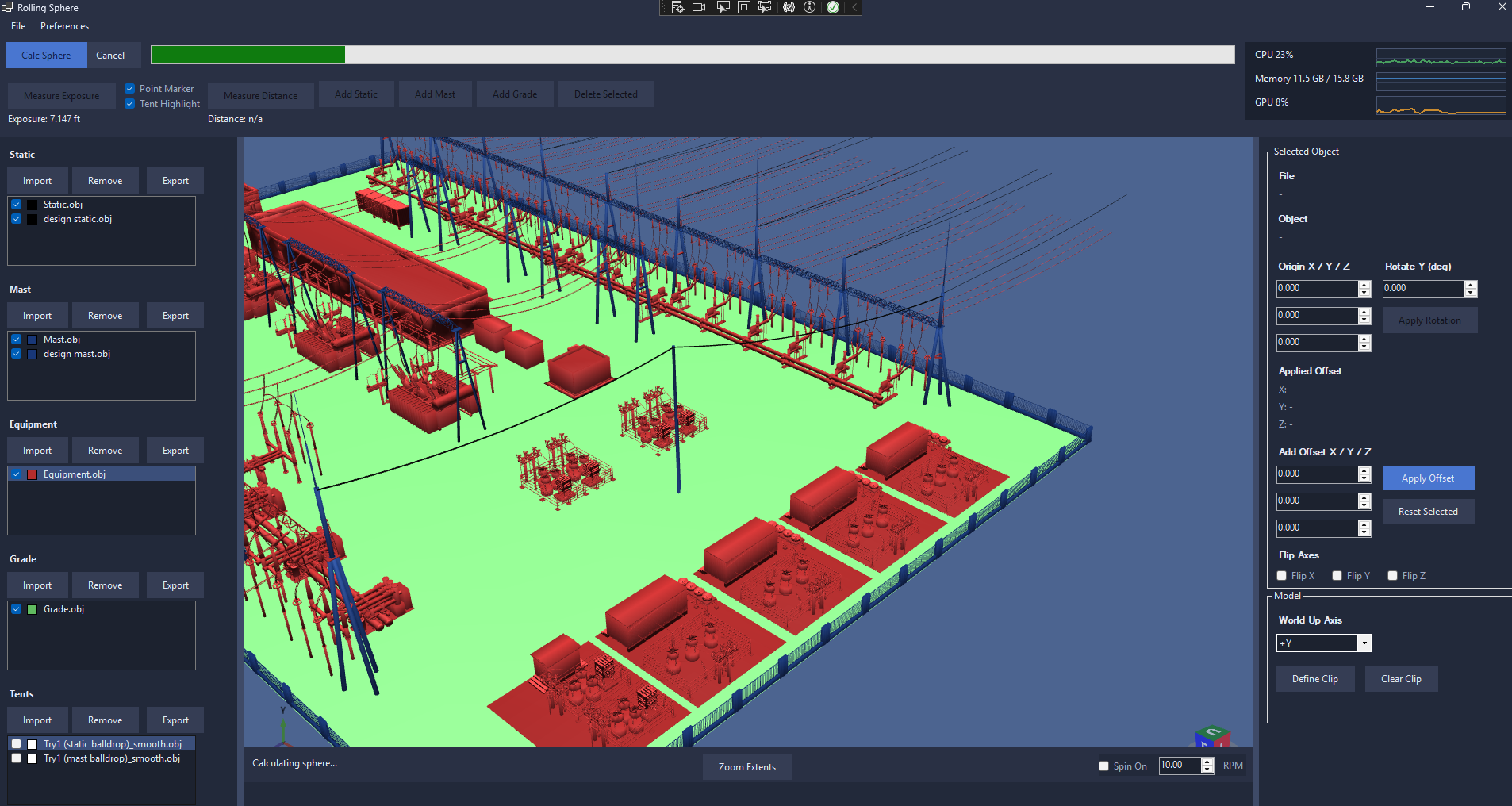
Overall site review with imported geometry, shielding layout, and active analysis context.
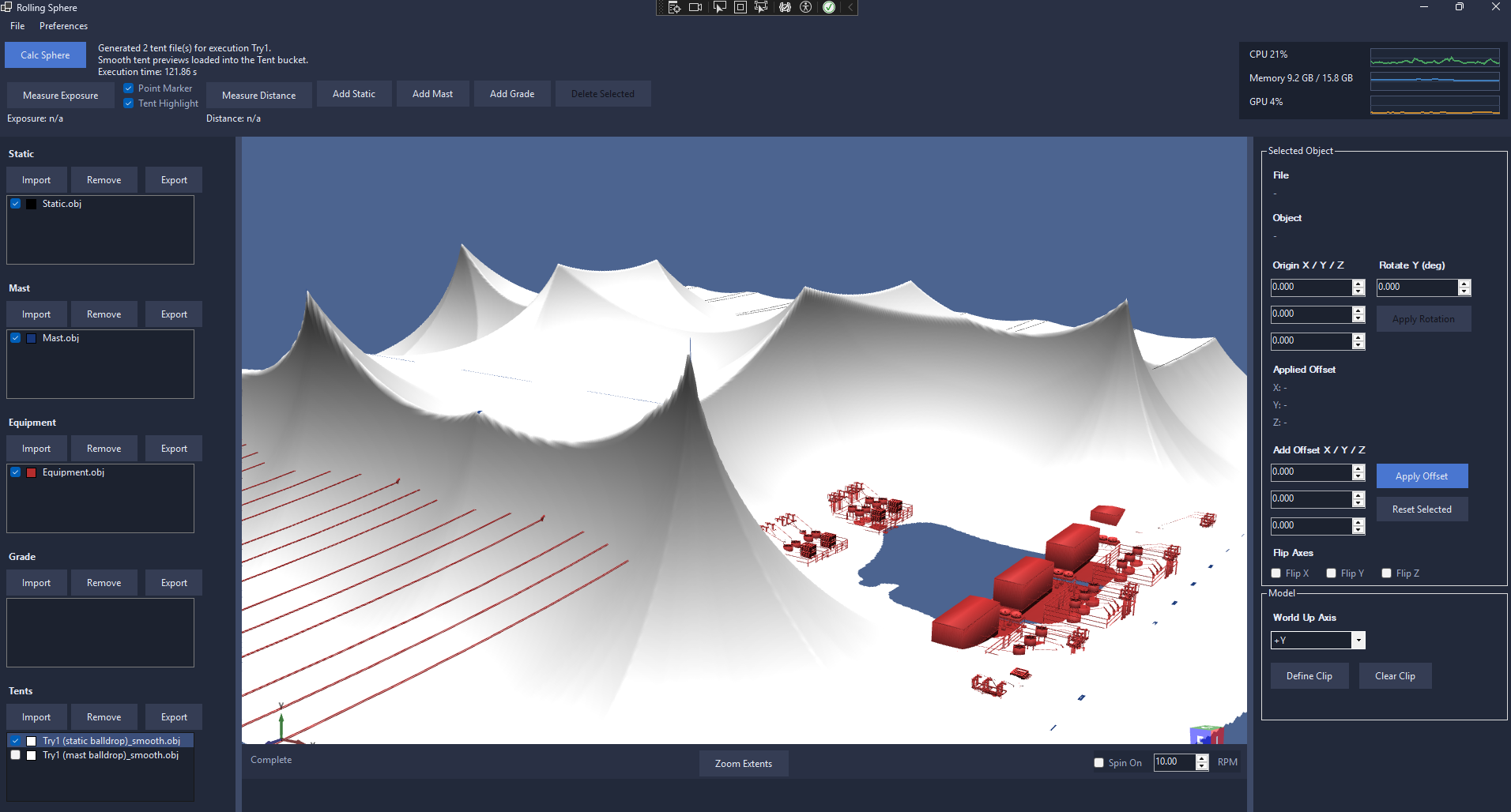
Mast and shield wire configuration with the modeled site visible during design refinement.
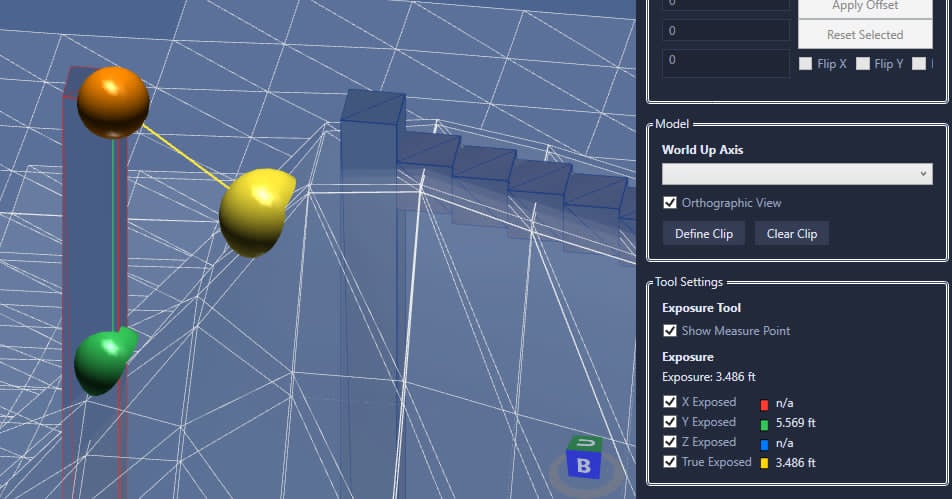
Exposure-focused review for identifying uncovered equipment and validating protection decisions.
Rolling Sphere Engine produces visual and measurement-based outputs that help engineering teams document coverage, compare scenarios, and communicate why a shielding design is acceptable or where additional work is needed.
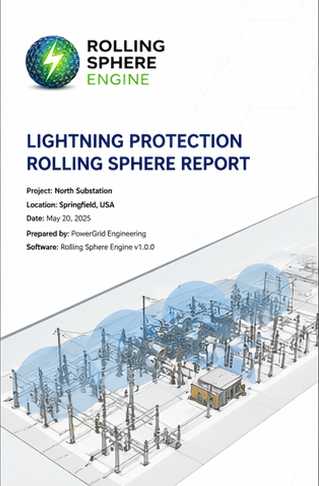
Example report output showing analysis imagery, scenario context, and engineering review content.
The reporting workflow is intended to preserve the technical reasoning behind a coverage decision, not just produce a static image. Teams can use the outputs to document assumptions, compare alternatives, and retain visual evidence from the 3D review.
Capture coverage tents and protected regions directly from the reviewed scenario so stakeholders can see shielding conditions in context.
Compare alternative mast and wire arrangements or parameter sets to show how the design changes affect site protection.
Include key distances and clearance checks that support the engineering review and design verification process.
Prepare outputs that can be carried into design documentation, internal review packages, or external deliverables.
Rolling sphere analysis software is used to evaluate lightning protection coverage by simulating the interaction of a defined radius sphere over site geometry. The Rolling Sphere Engine applies this method to imported 3D models to identify exposed equipment and validate shielding performance.
The software is used to assess lightning protection for high voltage substations, data centers, and renewable sites. It helps engineers identify gaps in shielding coverage and evaluate proposed mast and shield wire configurations.
The primary input is 3D site geometry imported via .obj, .step, or stp files, including equipment, structures, terrain, and protection elements such as masts and shield wires.
For brownfield, early-stage, or 2D designs, geometry can also be developed within the tool using built-in modeling aids, allowing evaluation even when a complete 3D model is not available.
The tool generates a visual protection envelope (coverage tent), highlights exposed or marginal areas, and provides measurement tools to evaluate clearances between equipment and the protection envelope.
Yes. The analysis is based on the rolling sphere method as defined in industry standards. The software provides a geometry-driven implementation that supports engineering evaluation and design review.
No. The software is intended to support engineering analysis and design validation. Final protection decisions and compliance with applicable standards remain the responsibility of the engineer of record.